Mary versus St. Mary

Sunday, Dec. 6, 2020

Today I face a moral dilemma: To do the right thing or to just consider doing the right thing.

You’ve heard the 1930s depression stories and now the pandemic stories of the homeless. You’ve seen the dirty and tear-drenched children’s faces, and recognized the heartbreak. If you’re like me, you might have shaken your head sadly in a moment of shared humanity, then transferred to a happier show and thought about what to prepare for dinner.

https://www.cbsnews.com/news/covid-and-the-looming-eviction-crisis/

This morning a CBS Sunday Morning segment addressed 2020 homelessness, in particular, the plight of those who’re losing their rent-paying jobs. Ted Koppel spoke with several in impending need of safe housing. In these situations, they don’t just leave their TVs and beds. When they run out of rent, they lose their schools, private places to bathe or pee. They leave behind their books, family photos, emotional and physical security.

Today I contemplated a bit longer than usual as I sat in the living room of my 35-year-old, 48′-long trailer near the NC coast. My place of peace. My respite from others’expectations.

The trailer isn’t fancy but it’s comfortable, even has central heating. And let’s not forget the 2 little bathrooms, with indoor toilets and 19 gallons of blistering hot water. From inside my home-away-from-home, I look out onto sprawling, probably 100-YO live oaks and a copse of pines and bushes, filled with yellow warblers and scarlett cardinals in warmer months.
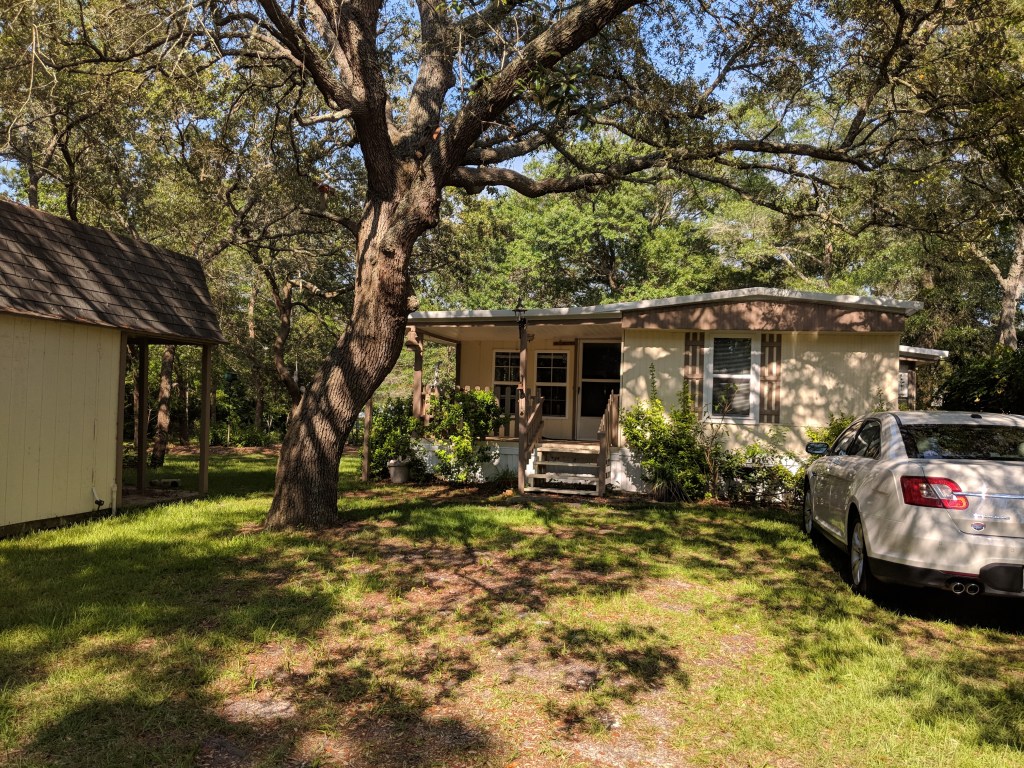
Home for the homeless?

In other words, my little place would be like a resort to someone without a place to live.

And then it hit me. OMG, I could actually help someone, really make a difference in eliminating someone’s cold and sleepless nights. I could provide someone a temporary escape from misery while they looked for a job. All I would have to do would be to forgo my mini-vacations and stay in our nice home in Lumberton.

I glowed under my own halo. St. Mary.

And what about those other vacation homes up and down the coast? Many of them are empty much of the winter. Those people could step up, too.

Then my less-than-saintly self spoke up, “St. Mary, are you crazy?! This is your home, your getaway, your future retirement. It’s your freakin’ newly painted property!”

“Yes,” St. Mary replied gently, “but your proverbial neighbors need a place to live, to be safe. Think of their little ones. What if it were Bastion sleeping in that Honda 4-seater?”

Ohh, I thought and replied, “But it isn’t Bastion. I don’t know these people. What if they stain the carpet? Or break the TV? Or lose pieces of the puzzles? Would I have to pay their utilities? How could I even be sure they’d leave?”
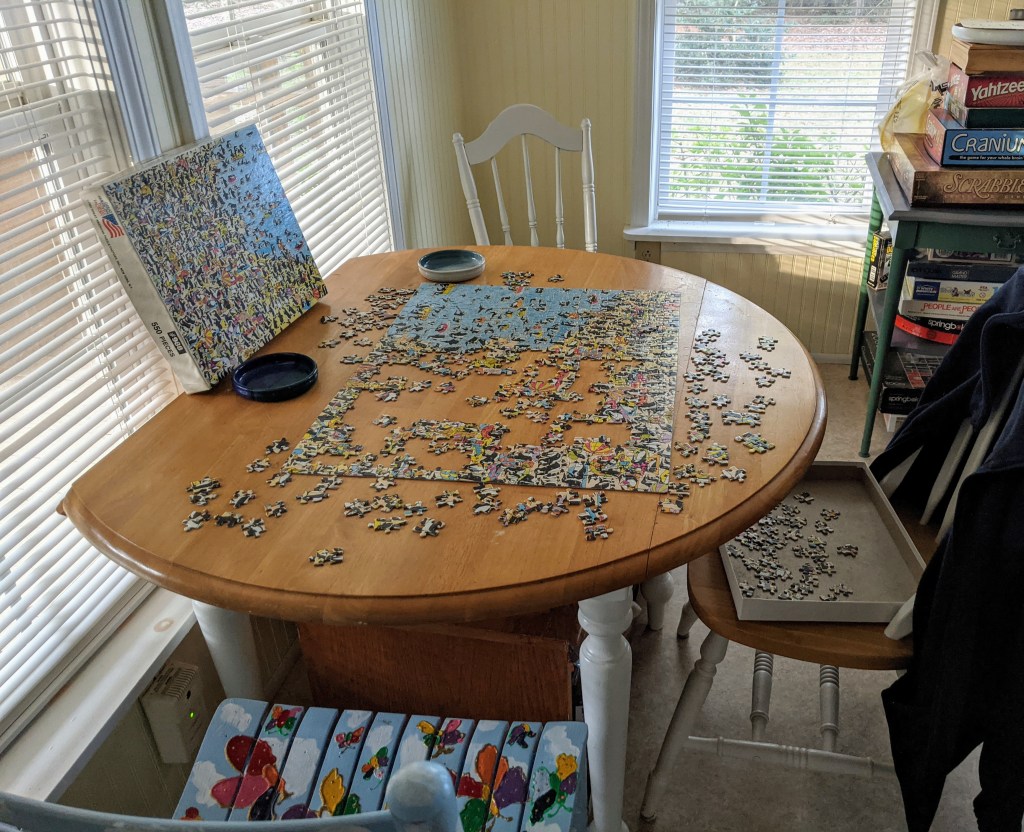
Lots of puzzle pieces.

“Oh, Mary, Mary. You are better than this,” St. Mary said as she faded away.

But I don’t know that I am better than that. The idea of loaning my house to those in need sounds really good inside my head. When I let it out into reality, it sounds scary and costly.

Will I do the right thing or just expect others to do the right things?

I don’t know. I’m thinking that plain old, selfish Mary will win this one. Really, I hope no one is even interested so I wouldn’t have to make a decision.

Maybe I’ll just donate some money. Would that be enough, St. Mary?
The Quiet Power of Our Everyday Lives

Nov. 27, 2020

I’ve teared up twice in the last several hours. Not due to personal loss or sadness, but because of the quiet power of everyday humanity.

Last night, my tearful response came as I watched PBS NewsHour. For Thanksgiving, they devoted half the show to tiny documentaries about individuals we’ve lost to Covid-19. Judy Woodruff narrated the one-minute obits without introduction, opinion, or histrionics. They were short accounts of where they lived, what their vocations were, and what their lives meant to those who knew them. And, for a few, what their lives meant to those who didn’t even know them.

Most of these people weren’t stars or standouts. They were worker bees – cooks, teachers, hospital staff. Their stories are moving simply because of the way they lived each day. They went to work or volunteered, usually returning to unimposing houses. They inspired others, not with grandiosity, but with consistent decency, determination, and dependability.

https://www.pbs.org/newshour/show/on-thanksgiving-remembering-those-weve-lost-due-to-covid-19

This morning I teared again, up watching a New York Times video documentary about a grandfather and grandson. Horace Bowers, the older fellow, is a self-made man, owner of a drycleaners. His grandson, 32-year-old Kris Bowers, is an award-winning pianist and composer.

We learn that Horace’s life, from a Southern tenant farm to LA business owner, set an example for Kris. In word and deed Grandad is clear that his people should live their own dreams, undeterred by limitations others might set. “Never think that you’re not supposed to be there,” Horace states quietly but unequivocally.

The Bowers individual stories are impressive, but their story, the grandfather-grandson story, is what spoke to my soul. There was a direct link between the older man’s quotidian decisions and his grandson’s impressive life decisions.

Neither the Bowers nor those lost to Covid-19 were saints. I’m guessing grandfather Horace spoke gruffly with tardy employees at least occasionally. Those nurses who died from covid-19 probably weren’t always kind with patients’ pushy family members or with their own worried spouses. Like us, they probably ran a red light or two and made other bad decisions.

My point is that, despite their foibles, they were heroes because of their routine actions and attitudes. My emotions overflowed because they were just you and I, people playing their best hands with whatever cards they had been dealt.

Papaw’s Move

So we took Papaw up to the nursing home yesterday and got him checked it. He didn’t really understand what was going on, even though both Joey and I talked to him about it. But when they got ready to wheel him in, and he realized we weren’t going in too, he was like “Where are y’all going? What’s going on?” I explained that we were going out of town for a while and that we didn’t want to leave him home alone. And these people would be taking care of him while we were gone. The lady pushing his chair said something like “We are going to take good care of you” and he started smiling and they took him on in.
Joey called this morning to check on him and they said he was doing fine.
We are driving to Ark today to get furniture for my parents. It was such a relief to leave the house this morning without having to feel worried/guilty for leaving Pap alone. Just knowing he has people looking after him all day and night feels like we did the right thing.
We met all the people who will be in charge of his care. They really seemed like caring people.
I was not sure that Joey was going to be able to go through with it, but he said he felt much better after meeting with the team of caretakers. And after he called this morning and checked on him, he felt even better.

Uncle Joe, 2015

My cousin Donna sent me that text this morning.  Her pain, their pain, dripped slowly down my cheeks as I read.  You don’t need the background to understand, but let me fill in just a bit. 

Donna’s father-in-law, my Uncle Joe, has lived with them for 5 years.  He has macular degeneration, major hearing loss, and Alzheimer’s with its relatively advanced mental and physical dysfunctions. They could no longer safely care for Papaw in their home.

Joey and Donna, 2015

My cousins, Donna and Joey, are driving to Arkansas to help her parents move back to their Mississippi hometown, to an apartment.  Her mother has moderate Alzheimer’s and her formerly independent father recently fell and can’t handle all the responsibilities alone anymore. 

Many of you reading this have similar stories, different details.  We could write tomes about growing old and helping others grow old.  (And I might.)

For now, Papaw’s story is enough.

Stuff

By guest writer, Denise Altman

Stuff – paraphernalia – trappings – accouterments – belongings.  There are many words for the things we collect as the years roll on.  Some people are very attached to their “stuff.”  I am not one of those people.  Luckily, neither is my husband.

In our 21 years of marriage, we have lived in 9 different homes.  We didn’t move because of work or other obligations, we just moved. 

One thing this moving tendency will do for you is to help you learn that “stuff” isn’t usually worth moving.  Every time we move, we clean out.  A few times, we have sold nearly everything we had and started over.  We are in the process of doing that once again.

There is something cathartic about letting go of things.  This isn’t so much philosophical or spiritual, but rather, physical.  I feel lighter knowing that I don’t have to pack and unpack crates of furniture and boxes of stuff.  And I can pick new things that better fit in our new place, when the time comes.

A few years ago, we were in the midst of a hurricane warning (we live at the beach).  This one was going to be a big one, and we had to evacuate.  We first went through the house, taking pictures of our belongings for insurance purposes.  

Then we decided to look around and see what we would want to take with us if we knew the house would be completely gone when we returned.  The result of that discussion…one plastic storage bin.  What was in it, you ask?  Mostly artwork our children had produced decades earlier, along with a few important legal documents.  

After looking through the house, there was really nothing else that couldn’t be easily replaced.  We could buy more furniture, linens, dishes, clothes.  We had many of our pictures already captured digitally or in the hands of our children, so we didn’t have to worry about those.  

We put that one bin in the car, along with our dog, Miss Priss, and headed for safety.  We found that exercise to be very meaningful.  

Some folks might think we are materialistic people – we typically live in a nice home and nice things.  But at the end of the day, we know what really matters.  And it isn’t the “stuff.”

Proud Feminist

Today I read an article that burned me up.  It denigrated women who don’t support the President’s current choice for SCOTUS.  It did so indirectly, insidiously, by attacking us for wanting fairness for the so-called fairer sex.

Referring to the SCOTUS candidate, the author states, “Half of her resume consists of behavior the leftists who control feminism constantly attack as anti-woman: big-time motherhood and big-time religion.”

Please understand that my remarks here are about the blasphemous use of the word “feminism.”  This blog post is only tangentially about the prospective SCOTUS justice, and it in no way addresses the topic of abortion, which is outside the scope of my comments.

The SCOTUS article presumes that feminists are lemmings, blindly following deep-left demagogues off a philosophically treacherous cliff.  The article flings around the word “feminism” as a profanity, accusing its proponents of opposing the jurist because she has several children and is a godly woman. 

Hogwash!  That verbiage is designed to color anyone who believes in gender equality as a red-tailed demon, eating our children and burning down religious institutions. You’d think feminists hate their own gender.  It’s fear mongering, intended to deter women from speaking out against other women with whom they disagree politically, in fear of being labeled “feminists.”

Neither leftists nor rightists control the definition of feminism:

“A person who supports the belief that women should have the same rights and opportunities as men.”

Oxford Dictionary definition of “feminist”

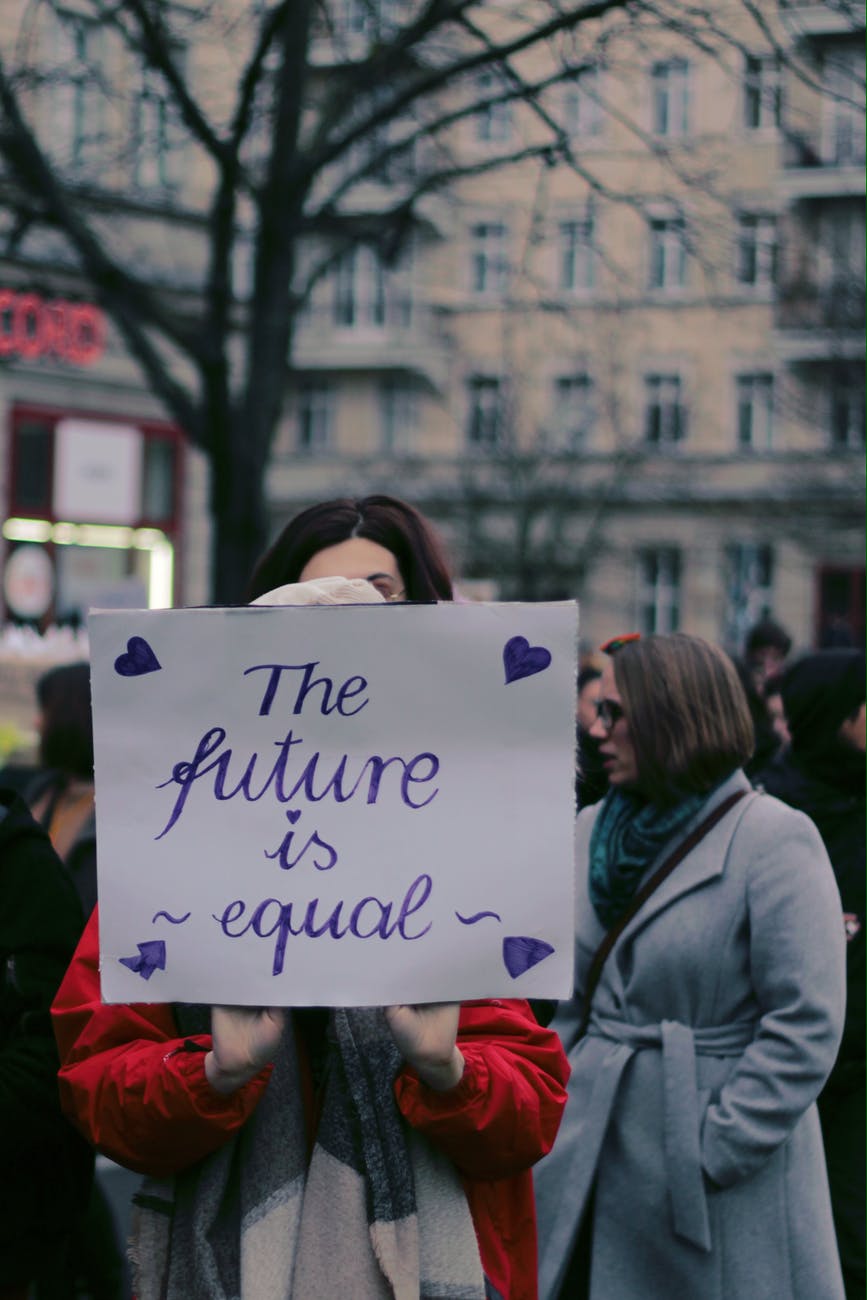
Feminists would be better titled equal-opportunity-ists, everybody-ists.  By its very definition, feminism swings both ways; if women are equal in the eyes of the law and in their rights to make their own choices, so are men.  So it isn’t just about women, but all the he’s, she’s, and they’s. 

RB Ginsberg knew that and fought for true equal opportunity.  In her law practice, she defended men so that they, too, could have rights such as balanced custody laws and time off with their newborns.  Years ago, one of my girlfriends was the negative recipient of that equality, having to pay her ex-husband alimony when he left her.  That’s equal opportunity.

Feminists

Feminists believe that people should be allowed to choose their own life paths, unrelated to gender.  Men can be nurses; women can be truck drivers.  Fathers can be stay-at-home dads; mothers can be primary breadwinners.  Or not.  And we can be religiously faithful, or not. 

What we feminists don’t like is someone bad-mouthing us to be the ones to stay home with our children or demanding that our spouses must be the ones who go to a job, or vice versa.  Many of the women and men I know have had to flip flop between those roles as life interrupted plans.  And it’s always been that way.  Men went off to war.  Poorer mothers worked in the fields,  factories, and laundry rooms.

As for the SCOTUS candidate, I admire her and her husband for being able to successfully juggle two stressful careers and a large family.  But admiration doesn’t mean that their choices should dictate mine or yours.  Or that mothers and fathers, stay-at-home or otherwise, are somehow more worthy than those who aren’t parents.

Listen up, you who think feminism is a dirty word. Here’s a real ugly word – sexism.  And if you’re not a feminist, then you are the very definition a sexist:

“Characterized by or showing prejudice, stereotyping, or discrimination, typically against women, on the basis of sex.

Oxford Dictionary definition of “sexist”

Feminists stand for equal rights, equal opportunity.  Students of the US Constitution might recognize that promise.  Those who truly think women need being taken care of just because they are women are sexist. Those who feel men should have more choices, higher pay, and more powerful positions are sexists.  Those are definitions, not opinions. 

By the way, the author lauds the potential justice for holding an important job and also making good use of her uterus by having a houseful of kids.  “And,” I quote, “She looks great while she does it.” Well, ain’t that just dandy? Also, irrelevant and sexist. 

America-before-feminism forced both men and women into tiny boxes, often brainwashing, belittling, or beating them into staying there.  The author of the SCOTUS article uses similar tactics by implying that feminists must be brainless, numbly following “radicals” who have hypnotized us with their liberal lyrics. 

What is radical or leftist about living a life without bearing children?  What is right about having a big family?  Or attending temple/ church/mosque every Friday/Saturday/Sunday?  Many would argue that our world would be safer and healthier with fewer humans and less rancorous religiosity.

Choosing your own path is called “freedom,” not right or wrong, not left or right, not Democrat or Republican.  Each of us is free to choose but not to force our choices on the rest.  That’s called “bullying,” “tyranny,” and other dirty words.

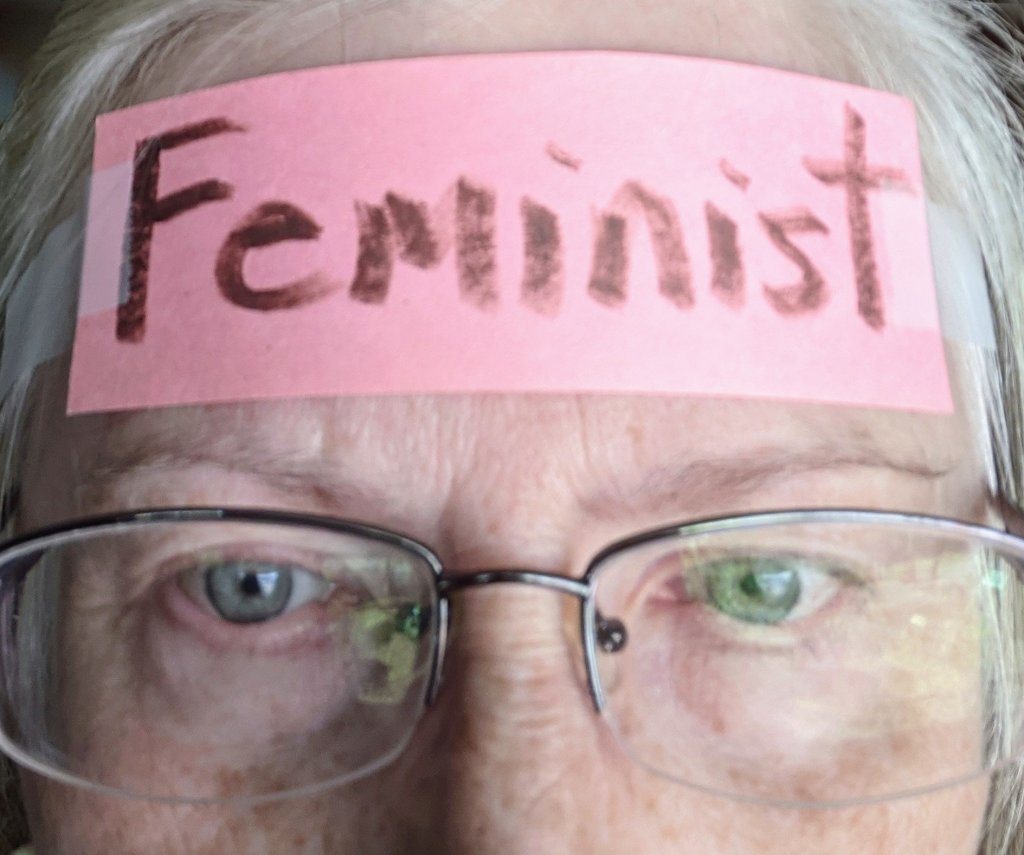
As for me, label me a proud “feminist.” 

Family Visits

Yesterday Aunt Ann and I had a delightful phone conversation.  We discussed her recent visits from family.  Ann is Mom’s sister and lives in beautiful Sedona AZ.  Her balcony looks out to the glorious terracotta hills for which Sedona is famous. 

October 2019.  Sedona view outside Ann’s suite.

At 98 (and a half, Auntie specifies) Annie Laurie has outlived all her 9 siblings.  This is ironic because, according to family lore, she’s been a hypochondriac all her life.  Even Ann agrees and chuckles with an incredulous shake of her surprisingly youthful head.

October 2019.  Aunt Ann, now 98.5 YO.

Family stories about Ann’s idiocyncracies are legendary.  She has professed to seeing auras.  She was a health freak long before it was popular, hanging upside down on a bar to stretch out her spine, juicing carrots and religiously drinking the juice 2-3 times a day.  For awhile, she and Uncle Mark drank so much carrot juice that they sported a full-body, mustard jaundice hue, as did her children. It’s true.

I love Aunt Ann’s phone calls. She’s a hoot and she laughs at my jokes.  She loves sparkle and bling.  These days, the best gifts, we can give her are glittering caps, phone calls, and letters. 

Her conversations cover a wide array of topics due to a broader worldview than many of our kin.  Being from California, Uncle Mark, her late husband and NASA engineering guy, probably contributed to that.  They lived near the East Coast family for a few years, then spent most of their adult lives out west – Texas, Utah, Arizona. 

Mark and Ann, cerca 2000

Today Mark was on Ann’s mind.  He and his new wife visited.  Frankly, I was flabbergasted that he’d divorced Aunt Ann and I told her so.  “Well,” she said, “He looks really good and he wanted someone younger” . . . and (I paraphrase here) able to give him more physical attention.

Sorry if I’ve confused you with seeming contradictions of Mark’s life-after-death conversations.  He died in 2015 and started visiting Annie again a couple of years ago after she fell and hit her head.  Theirs has been an emotionally rocky reacquaintance, as his remarriage indicates.  But Ann is okay with it now, she says.

In addition to Mark, yesterday her parents and her sisters, Louise and Frances, dropped by.  I asked about each of them and we gossipped a bit.  Ann said Louise (my mother who’s on the front row, far right in the family photo) was wearing herself out taking care of grama and refused to let anyone else help.  “Yes,” I said, “That’s just like Mom.  She’ll work herself to death.”

1980s?  Annie in pink and her siblings

Despite what it sounds like, Aunt Ann hasn’t lost her mind.  It’s more like she’s gained a parallel universe.

Ann’s memory is good.  Her grasp of her three living children and numerous grands and great-grands is usually intact.   She knows where she lives and when to go to the cafeteria and who her nurses are.  That is, she knows unless discussing her formerly-thought-dead family.  Then the details are more fluid.

Ann accepts her second reality because it’s vivid and detailed.  Simultaneously, she knows that her thoughts about long-gone relatives don’t make sense.  She seems to be able to carry these opposing concepts side-by-side, so I changed the subject to take advantage of her unique insights. 

“Aunt Ann, I wish I could get inside Dad’s head to understand what’s going on in there,” I said.  “I realize that you don’t always think so clearly these days either.  Do you have any suggestions for me?”

“Yes, honey,” she said, ” Just listen and go along with him, Mary Lou.”

Sage advice from one who really does understand. 

Son’s Day, 2020

Friday, Sept 25, 2020, was National Daughters Day and Sunday, Sept 27, was National Sons Day. Plus, it was International Daughters Day. Or maybe Sons Day is Sept 28 every year. I’m not sure because Internet “facts” conflict.

What seems consistent is the date of Son and Daughter day, which is next Aug. 12, 2021. That gives us plenty of time to shop.

I didn’t find much history on Sons Day, but according to the TimesOfIndia.com, International Daughters Day was created to help improve the way girls and women are treated in patriarchal cultures. One source said its origins were as early as 1922. The focus is on raising the societal value of girls and encouraging gender equality. I’m sure RBG would’ve been proud to mail lots of those greeting cards.

Even more semi-official holidays exist to celebrate Earth’s human offspring. Who knew?  Well, Facebook, of course.

I figured these were Hallmark schemes to sell more cards, but apparently not. And celebration seems reasonable, given that moms and dads, grandmothers and grandfathers, have their own holidays.

All this is a prelude (ahem. . . excuse) to publicly celebrate (and embarrass) my own son. I love him. After all, he is my flesh and blood.  And I like him because of the person he has become, unrelated to our shared DNA. 

2020, Bastion and Blake

Without further ado and with apologies to Elizabeth Barrett Browning and my literary friends . . . .

How do I like thee, Blake?  Let me count the ways.  I like thee for the depth and breadth and height thy character can reach, even when challenged by self-interest.  For thy ideal grace, self-control, and good humor under pressure and stress. For treating all thee meet with fairness and respect.

I like thee for thy good sense, especially thy choice to add sunshine to thy family with the bright lights of thy wife Thanh and thy son Bastion.  For thy hard work and independence.  I like thee freely, as thee demand little, yet give kindness and attention to those around thee, especially to thy grandparents

And I like thee for the passion and depth of thy thoughts and thy determination to face life head on.  I like thee with the breath, smiles, tears, of all my life.

As far as I’m concerned, Blake, you deserve to be celebrated every day. Happy belated National Sons Day 2020.

Dangerous Distractions

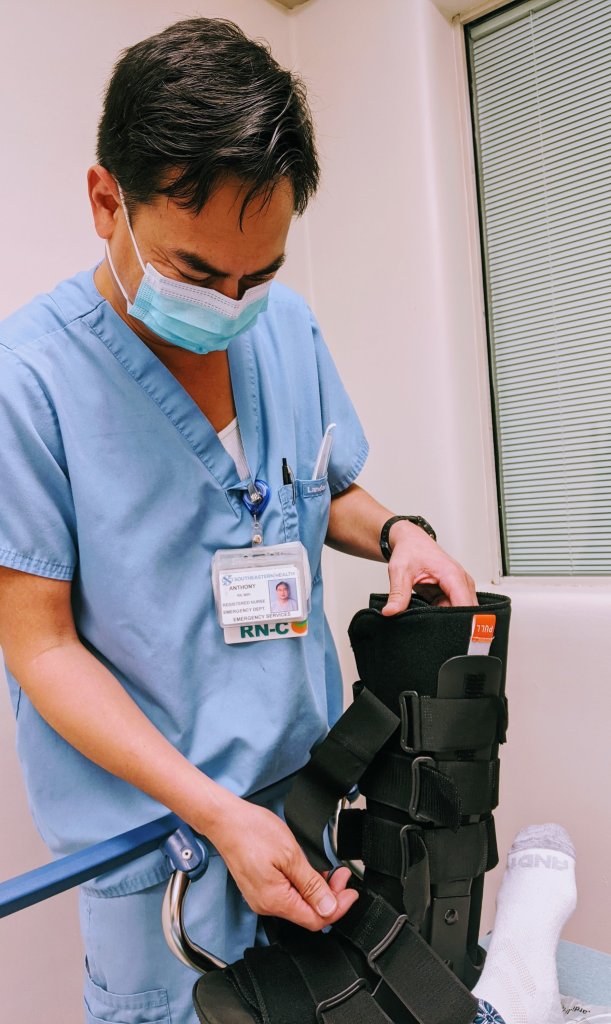
I’m on a gurney in the ER as I type this. 

Don’t worry, it isn’t life threatening.  It does, however, threaten my exercise plans for the next few months because I tore my left achilles tendon.  Again. 

I’ll start with the end of today’s adventure.  No broken bones.  Tendon is torn, not severed.  No agonizing pain, as long as I don’t walk.  The solution is simple, time – wearing a huge, black stabilizing boot for weeks, until the tendon heals. 

Sept 27, 2020. Anthony Cabatu, ER RN

I can be blase because I know this particular drill.  It happens about every 3 decades.  And, as I’ve written in previous posts, experience can help ease worry during crises.

I first tore this tendon when my son was 18-months-old.  You probably realize that it’s almost impossible to stay off your feet with a toddler, but I tried to sit on the floor instead of standing when Blake needed help. 

After daily and teary re-injuries, I finally begged the Fort McPherson GA doctor for a cast.  Six weeks later the pain and 34 years of calf muscle disappeared.  Those of you who knew me in the first half of my life can imagine how different my two calves looked – one bulked up from a lifetime of gymnastics, jogging, and racquetball, and one pitifully thin.

Despite that, I nearly kissed the young med tech who removed the cast.  No pain.  No pain.  No muscle, no strength either, but those were way down my list of what was important then.  Those could be rebuilt because I had no pain.

My lost strength returned within a year or two.  The only residual was a slightly disfigured left heel and a less robust calf. 

I thought. 

Achilles-Tendon-Round-Two began this past August, walking on the beach.  Two to four miles a day for almost a week.  Nothing unusual.  Had never had a problem walking miles in the sand, until I did. 

The last time I walked off the beach was better described as limping off.  Hmmm . . . the uncomfortable sensation felt strangely familiar, even after 30+ years.  It wasn’t excruciating like years ago but I knew I needed to be careful. 

In case you’re wondering, “being careful” means staying off the bad foot and keeping it up for many days, using ice on and off for the first couple of days.  Putting no weight on those toes or the heal, which is hard to do without a medical boot or a cast.  Using anti-inflammatories even when you’re not in pain.  Maybe visiting a doctor to get a boot. 

I did everything except visit the doctor. I even configured my own heel support and it worked. This week I wore regular shoes and occasionally no shoes.  My gait was close to normal if I didn’t rush. 

I’d mostly avoided yardwork because I knew I’d get distracted and forget to protect my foot.  Turns out I’m prescient.

This morning, I was optimistic that my heel was about healed.  I gingerly walked to the blueberry plants to add depleted coffee grounds to the soil, unaware of the distraction lurking nearby.

The problem lay in the fact that, to protect my heel, I’d recently ignored the yard.  Robert Hedgepeth agreed to mow the lawn for the remainder of the season.  He did a fine job but I hadn’t asked him to put down fire ant powder after he mowed.  That was my routine, to cut the grass then provide the ants generous incentive to move away for awhile.

This morning I was distributing the coffee grounds when one of those firey insects decided my foot looked tasty and took a bite.  That was the distraction I’d been avoiding.  My only thought was to get him (them?) off me. 

A split second later, my left heel felt like Hank Aaron struck it with his bat. It felt exactly like I remembered it feeling the first time it tore, lo’ those many years ago in the racquetball court.  Exactly the same.  I screamed and immediately went to the ground to mourn what I was preparing to lose.  Again.  

And that’s why I ended up in the ER today. Fire ants.

Sept 27, 2020.  Maria Lim, ER PA

Here’s what I’ve learned:

1. Don’t jump back full force into your exercise routine if you’ve significantly cut back.  That’s the mistake I made both times I damaged my Achilles.  Rebuild those supporting muscles first.

2. Wear the medical support equipment longer than you think you need to. That gives the injury time to fully heal before you return to normal, distracting activities.

3. Keep your fire ant population under control.

Keep the birds away from the table

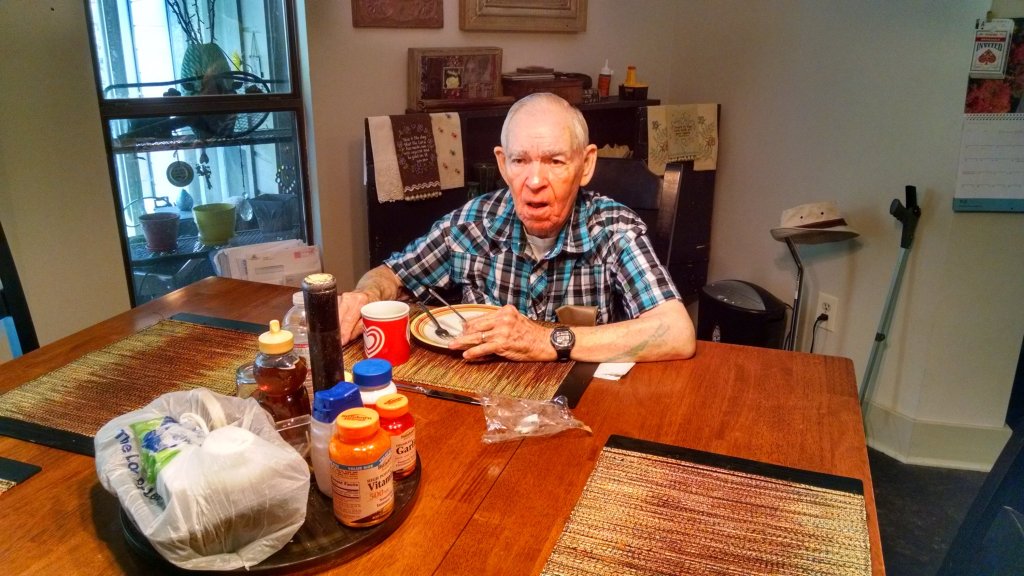
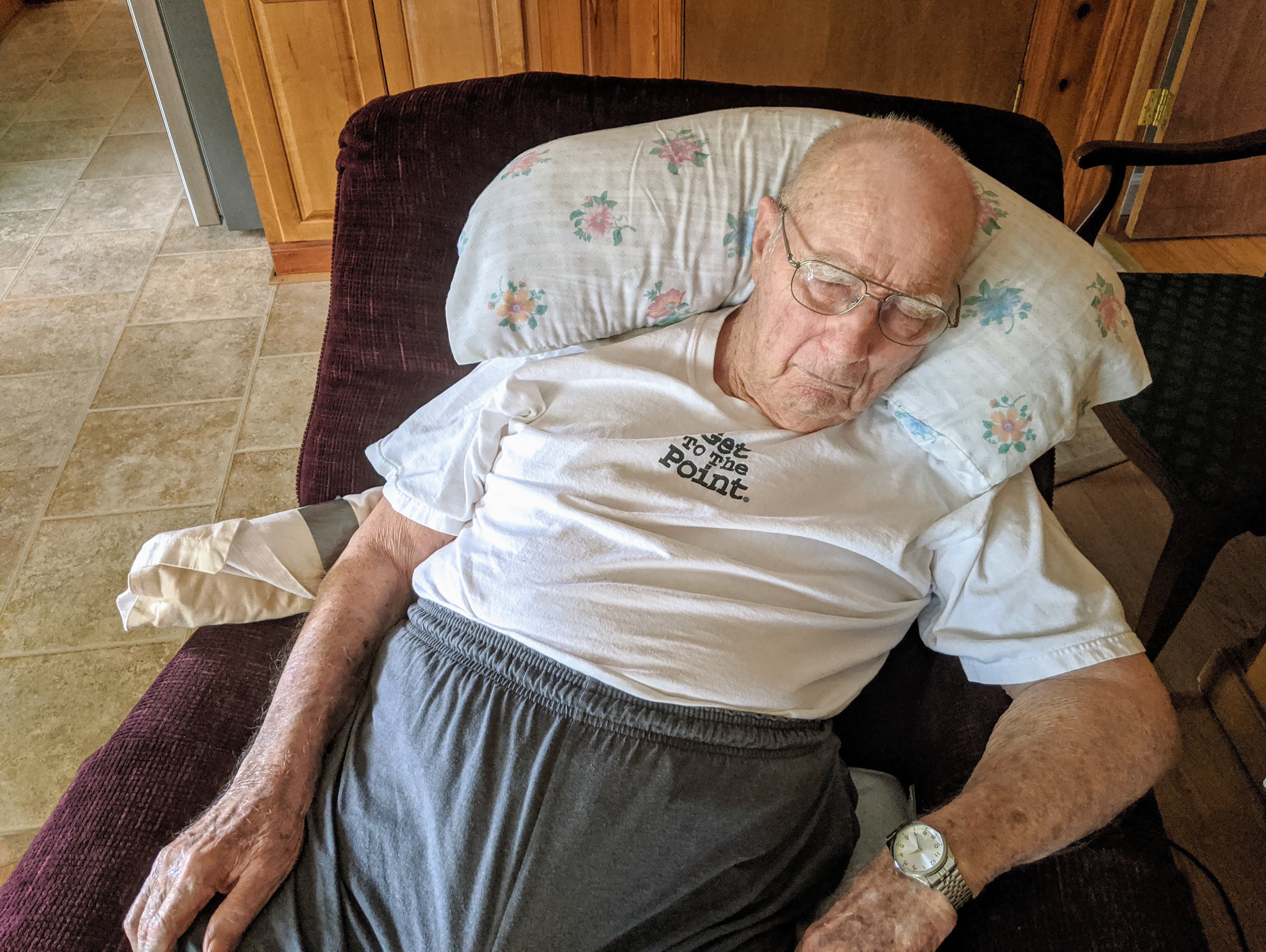
Dad was eating breakfast today and called me over.  “Mary, help me keep the birds away from my cereal,” he requested. 

Sept 26, 2020.  Pete Storms

“Okay, Dad, but I don’t think they’ll bother you,” I responded, and that seemed to satisfy him.  

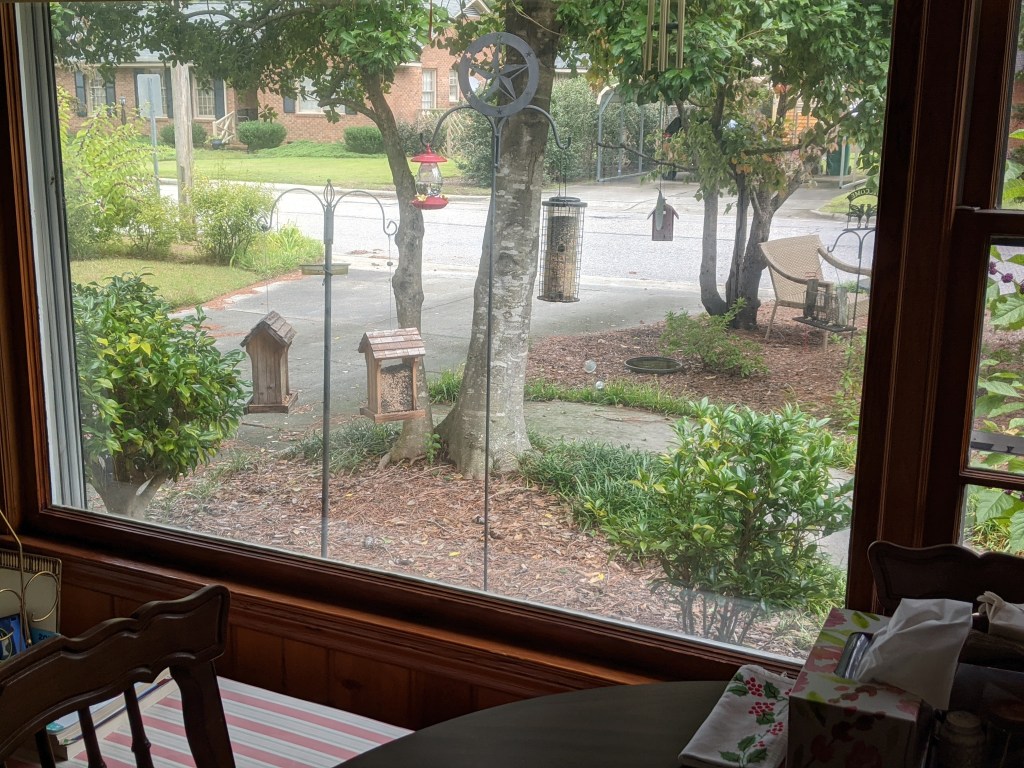
Dad has reason to be concerned about the colorful cardinals and drab sparrows trying to join him for a meal.  They sometimes fly directly into our window, only a couple of feet from the kitchen table.

I theorize that they see their reflections, ignore the window, then fly toward the birds they see inside.  Some might say it’s because they don’t see the window at all, but I’m not a good enough housekeeper for that to be a viable hypothesis.

How strange and unpredictable is the brain and how it interprets what it sees and hears.  Watching young ones learn about their world is intriguing, as is watching old ones unlearn.

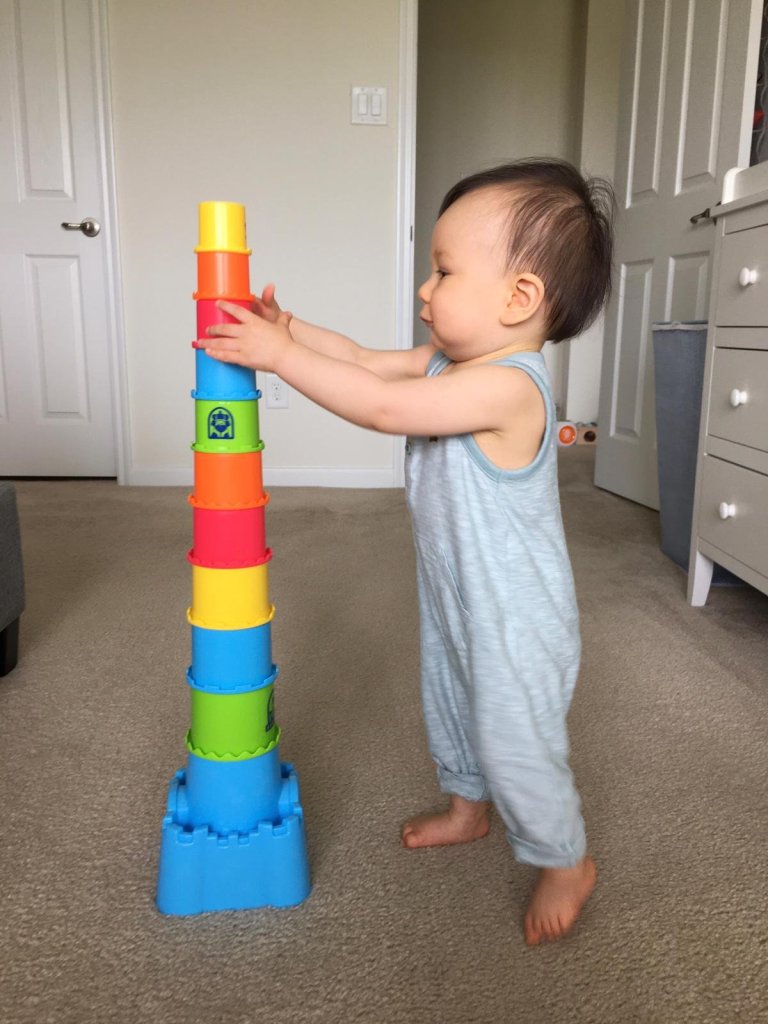
Last weekend, Dad and I were videochatting with 18-month-old Bastion.  I aimed my phone so that little one could see Clyde and Jackie close up.  He immediately walked to the phone and touched the screen, trying to reach those babies.

Clyde and Jackie

Neurologists might disagree, but it seems to me that Bastion reaching out to Clyde and Jackie is similar to Dad’s concern that the birds will come inside to join him for a meal.  Neither completely understands that a piece of glass separates them in space or distance. 

Sept 26, 2020.  Bird feeders outside our picture window.

Of course, Bastion will soon learn that the screen and the babies are far away realities.  And he’ll eventually figure out that, like the dolls, many things in life aren’t what they seem. 

Dad, on the other hand, is losing his ability to make those distinctions.  To him, C&J are living children, even though he knows their skin feels like plastic.  Also, he often believes the faces on TV are in the room with us.  He may even think they’re people we know.

It’s not just glass that no longer separates Dad’s truth from fiction.  His mental membranes don’t seem to form a wall between what’s “real” and what he imagines.  He dreams are true for him.  He awakens driven to take follow-up action, to pay an employee from his nighttime work at the shipyard or maybe to repair his RV from his overnight adventure. 

It’s tempting to shake our heads in pity.  Or maybe to giggle uncomfortably.  Yes, I feel sad when Dad is visibly confused, when what is inside his head doesn’t conform to his lifelong grasp of what is outside it.

I try to soothe, not pity.  When possible, I go along with his truth.  His reality and his brain’s self-created memories can be so much more interesting and lively than his mostly immobile actuality.

It is my joy to watch Dad with C&J.  Like Bastion, he believes they are babies. He loves them.  They bring him visible pleasure as he smiles and sings to them.  Also like Bastion, Dad thinks he can reach out and touch that face on the other side of the phone screen, the face of his soft, warm, excited great-grandson. 

Bastion

In their minds, both my father and my grandson are as close as that phone screen, not half a continent away.  That is a sweet reality.   

Lunch-time experiments

Family update, Aug. 30, 2020, Saturday

Dad is doing okay. Nothing has changed dramatically in the past month. As expected, he’s literally slowing down physically and mentally. Walking less, talking less, sleeping more.

A few times a week, Dad sleeps/rests in his bed until late-afternoon, perhaps holding Clyde or Jackie. When he sleeps late, he seems stronger and more alert once he finally does get out of bed. Sometimes he stays up long enough to watch The Wheel, sometimes not.

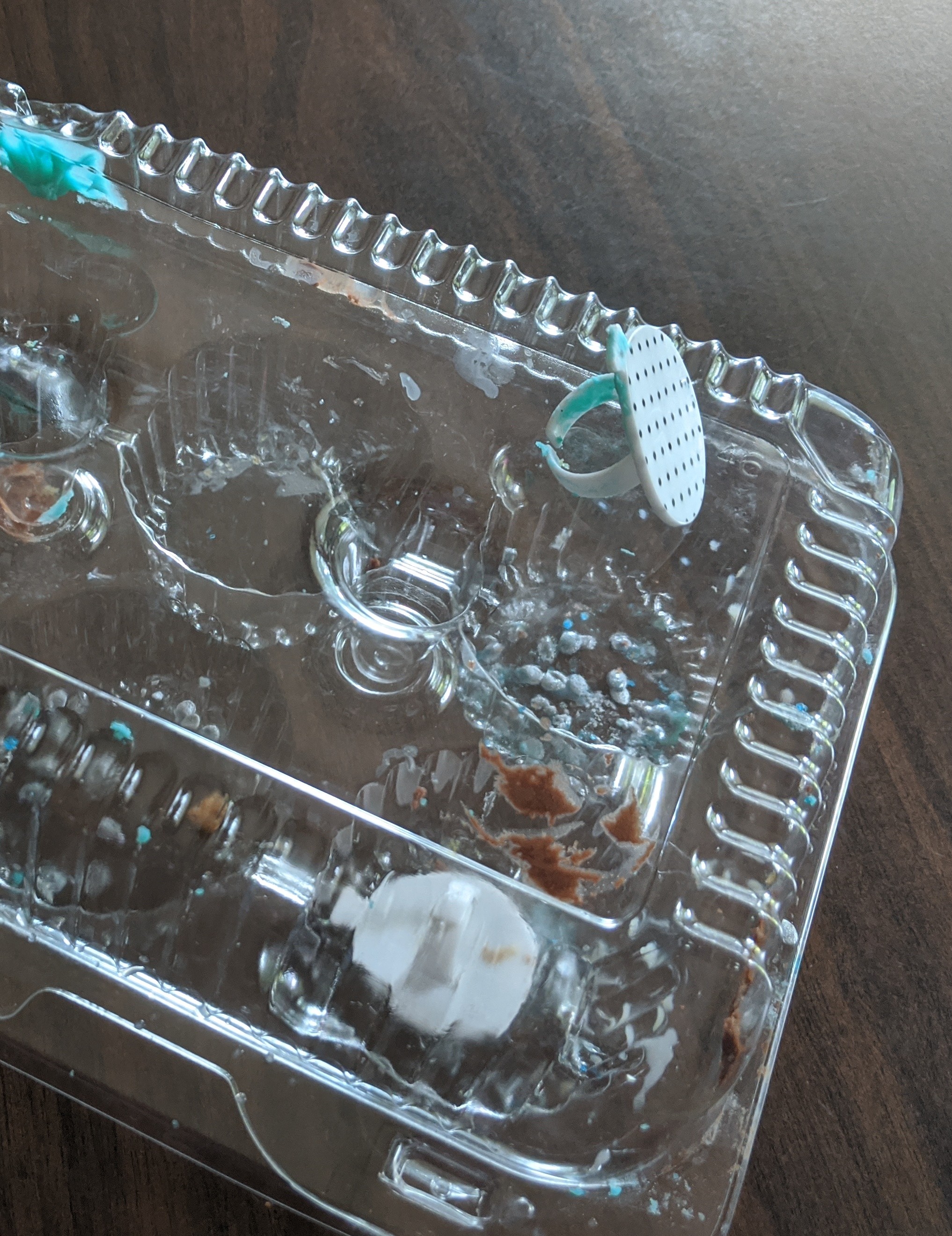
Most days now, Mr. Pete feeds himself. It’s messy but it does the job. He gets easily distracted by any little thing; today it was a cupcake container. He can’t seem to use both hands at once to reconnect the lid.

Pete was working on opening or closing the crinkly plastic box for long minutes at a time, completely ignoring his fruit salad for awhile, eating a bit, then going back to the cupcake holder.

I let him struggle because it gives him something to think about, something to do with his hands. It also helps me understand how well his mind and body are working together. Don’t worry, I’m with him during these eating experiments.

Today I purposely left the paper on the little cake to observe whether Dad would remove it before taking a bite. And, if not, to find out what he’d do when he tried to chew the paper. Mary Ann rescued him from my experiment, so I can’t tell you which path he would’ve taken.

The cupcake dilemma made it particularly interesting to observe Dad at the table. In addition to paper and plastic, each turquoise topped cupcake had a plastic pinky ring on the top. I’d pointed these out to him, taking them off each cupcake and explaining that they weren’t edible.

Later, while Dad was eating his granola cereal, I heard him trying to crack an errant pecan shell between his teeth. Of course, it wasn’t a shell, it was a plastic cupcake ring that he seemed determined to chew up. Apparently, he’d put it in his mouth, thinking it was candy.

As for me, I’m in Lumberton today but have been visiting my HB place more often. I leave Lumberton only while Dad is strong enough to get around with one caregiver. And when neither of us has doctor appointments.

My beau, Tom, is self-isolating AMAP (as much as possible) while he continues to empty his formerly flooded basement. This is just the prep for pulling out a half-house-full of walls and insulation before starting the repair process.

Dad and I are safe, semi-sound, and laughing AMAP. Hope you are, too.

PS. I didn’t allow Dad to eat the plastic ring. In case you were wondering.